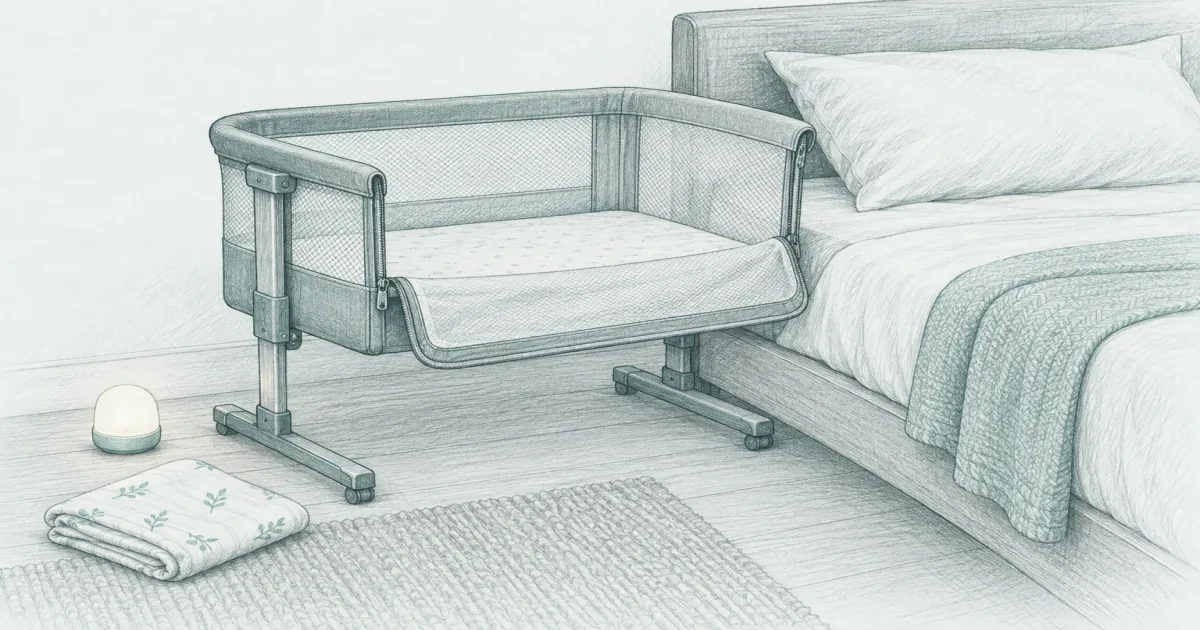
Best Bassinet for Bedside Sleep (2026): Safe Picks for Newborns
Nursery and sleep
The best bassinet for bedside sleep for most parents is the Baby Delight Beside Me Dreamer. It anchors to the bed frame, drops one mesh side, and adjusts to six heights. Here are two more picks for smaller budgets and bigger spaces.
Our picks
The best bassinet for bedside sleep is the Baby Delight Beside Me Dreamer when you want a close, anchored sleep surface without a big spend. The Semphis 3-in-1 is the move for a tight budget or a small room, and the BabyBond Bedside Crib suits parents who want one piece that lasts past the bassinet stage. All three keep your baby on a separate, breathable surface within arm's reach.
If you are setting up the whole room, our nursery guides cover the rest of what you need, and the best baby monitor is the piece you will touch every night.
What makes a bedside bassinet safe
A bedside bassinet earns its place by being easy to reach and simple to use at 3 a.m. Those two things drive every feature that matters.
Skip any bassinet that comes with bumpers, pillows, or a loose mattress. Those are the opposite of what safe sleep wants.
The picks at a glance
Baby Delight Beside Me Dreamer: the best bassinet for bedside use for most parents
The Baby Delight Beside Me Dreamer is the bassinet most parents should start with. It works as a bedside sleeper and as a standalone bassinet, so you can keep it next to the bed at night and move it to the living room for naps.
The setup is the appeal. You anchor it to your bed frame with the included straps, dial the six-position height knob to line up with your mattress, and unzip the side panel when you want your baby close. The mattress is firm and the cover zips off for washing, which matters during the spit-up months.
For small rooms, it is light enough to move and it folds for travel. The main limits are the frame flex and the height ceiling, so measure your mattress height before you buy if you have a tall bed. For the price, it is the best balance of access, safety, and simplicity here.
Two more bedside sleepers worth a look
If the Dreamer's price or height does not fit, these two cover the budget and the long-game ends of the category.
The Semphis 3-in-1 Baby Bassinet is the best bassinet for bedside sleep when the budget is under $100. It runs as a bedside sleeper, a standalone crib, or a portable travel bed, and the breathable mesh sides keep it airy. The storage basket under the sleep surface holds diapers and wipes within reach, and the locking wheels make it easy to move from room to room. The trade is a thin mattress and a height range that tops out low, so check your bed height first.
The BabyBond Bedside Crib is the best bedside sleeper if you want room to grow. It uses a fixing strap to sit flush against the bed, a drop-down side for night access, and full mesh sides on all four panels. The 3 to 7 degree incline is a thoughtful touch for babies who are uncomfortable after feeds.
Its real advantage is longevity. Once your baby outgrows the bassinet, the same frame converts to a standalone crib, a playpen, or a travel bed, which is why it costs more up front. If you want one piece that spans the first year instead of two, this is the pick.
Bedside bassinet vs. crib vs. baby monitor: what each does
New parents often shop these together, but they do different jobs.
You do not need a monitor for a bedside bassinet at night, since you are right there. A monitor matters once the baby moves to a crib in their own room.
Who should skip a bedside bassinet
Not every family needs one.
A bedside bassinet is a short-term tool for the newborn months. If you want one purchase to last from birth to toddler, a convertible crib or a playard does more.
Setup tips for the first night
A little prep makes the first week calmer.
- Measure your mattress height. Line the bassinet up before the baby arrives, and keep a small level handy if the floor is uneven.
- Anchor it and test the fit. Push gently on the frame to confirm the straps hold before you put the baby in.
- Set the height before bedtime. Adjusting it in the dark with a crying baby is harder than it sounds.
- Keep the sleep surface clear. A fitted sheet only. No blankets, bumpers, or positioners.
- Check the weight and age limit weekly. Move to a crib or playpen as soon as your baby pushes up or reaches the limit.
For the rest of the room, from safe sleep setup to the gear you use at night, browse our nursery guides. The bassinet is the piece you will touch every night, so it is worth getting the fit right the first time.
Frequently Asked Questions
Are bedside bassinets a good idea?
They are a good fit if you want your baby close for night feeds and checks while keeping a separate sleep surface. Pediatric guidance recommends room-sharing, with the baby on a separate surface in your room, for the first six months. A bedside bassinet does exactly that. It is not the same as bed-sharing, which is a different choice.
What is the safest bedside bassinet?
Look for four things: a firm, flat mattress with a snug sheet, mesh sides for airflow, a secure strap or anchor to the adult bed, and a drop side that closes fully. The Baby Delight Beside Me Dreamer and BabyBond Bedside Crib both strap to the bed frame and use mesh walls. Skip any model with soft bedding, bumpers, or a mattress that does not fit tight.
How long can a baby sleep in a bedside bassinet?
Most bassinets are for newborns up to about five months, or until your baby can push up on hands and knees, whichever comes first. The Baby Delight Beside Me Dreamer lists five months or 20 lb. The BabyBond Bedside Crib lasts longer because it converts to a playpen. Plan the next sleep surface before your baby outgrows the bassinet.
Do bedside bassinets attach to the bed?
Some do, and some just sit beside the bed. The Baby Delight Beside Me Dreamer anchors to the bed frame with straps, and the BabyBond Bedside Crib uses a fixing strap. The Semphis 3-in-1 is a freestanding sleeper that you roll up beside the bed. An attached sleeper stays flush, which is the point for night feeds.
What is the difference between a bassinet and a bedside sleeper?
A bassinet is a small standalone sleep space. A bedside sleeper is a bassinet built to sit flush against your bed, usually with a drop side and a strap. Most models here do both, which is why the names get used together. The Semphis 3-in-1 can even fold into a portable travel bed.
Do you need a separate mattress for a bedside bassinet?
Usually no. The bassinet comes with a firm mattress and a fitted sheet made for its size. If you add a cover, it has to be tight and thin, because a loose or soft layer is a suffocation risk for newborns. The BabyBond Bedside Crib works best with a snug sheet over its included pad.
Can a baby sleep in a bassinet overnight?
Yes, if the bassinet is set up as the maker instructs and your baby is within the weight and age limits. Use it for overnight sleep in your room, not just naps. Once your baby can roll or push up, move to a crib or playpen. The Baby Delight Beside Me Dreamer and BabyBond both work as overnight sleepers in that window.
Where should a bedside bassinet sit in the room?
Put it on the parent side of the bed, with the drop side facing you, and keep it clear of cords, blinds, and heaters. Leave a gap-free fit against your mattress if it attaches. If your room is tight, measure the footprint first, because the BabyBond is long and the Semphis needs room to roll.
Is a bedside bassinet worth it for a small apartment?
Yes, especially if the baby sleeps in your room. It buys you easy night feeds without a second full nursery, and it folds or rolls away during the day. The Semphis 3-in-1 is the easiest to tuck away, since it folds flat and has locking wheels.