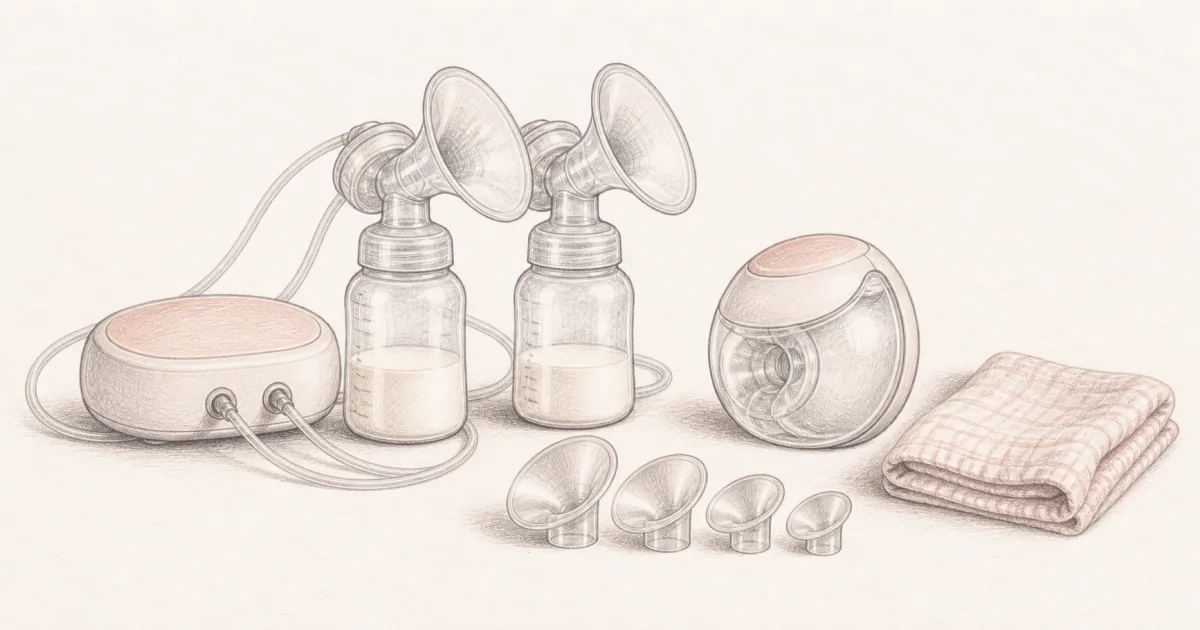
Best Breast Pump (2026): Picks That Move Milk Fast
Feeding
A breast pump is the one piece of gear you use six times a day, so fit and comfort matter more than any feature list. Here are the two picks we would start with.
Our picks
The best breast pump for most moms is the Spectra S1 Plus, a rechargeable double electric that empties well and keeps working after months of daily use. The best wearable for a commute or a desk job is the eufy Heated Wearable S1 Pro, which pumps inside a bra and warms the flange while it runs. Those are two different jobs, which is why so many moms end up with one of each.
Our feeding guides cover bottles, high chairs, and the rest of the kitchen routine. If you are still building the nursery, the best baby monitor picks handle the sleep side, and the best stroller for travel covers the gear that leaves the house.
What separates a good breast pump from a frustrating one
A pump does not have to be fancy. It has to empty you, feel tolerable at 3 a.m., and keep working after four months of daily use. Four things decide that.
The one feature that gets oversold is maximum suction. A higher number does not move more milk. Fit and rhythm do.
The best breast pumps at a glance
Spectra S1 Plus: the best breast pump for most moms
The Spectra S1 Plus is the pump we would tell a friend to buy. It is a full-size double electric with a built-in battery, so it lives on the nightstand or the desk without being chained to a wall. The closed system puts a physical barrier between your milk and the tubing, which keeps cleanup simple and the motor clean.
What sets it apart is the control. You can run the massage phase fast and light to trigger letdown, then switch to a slower expression rhythm with more suction. Being able to tune both, instead of picking from a few presets, is the difference between a pump that works and one you dread. The motor is quiet enough that pumping behind a closed door does not announce itself to the whole house.
The main thing to plan for is fit. The pump ships with a 24mm flange and a larger spare, and a lot of moms need something closer to 17mm to 21mm. Order a set of inserts or an off-brand flange in your size at the same time as the pump. Suction that drops off at four months is usually worn valves, not a dead motor, and a fresh set of silicone parts brings it back.
If you pump around the clock, at home and at work, this is the pump to build your routine around.
eufy Heated Wearable S1 Pro: the best wearable for pumping on the move
The eufy Heated Wearable S1 Pro is the wearable for moms who need to pump while doing something else. Each cup sits inside a nursing bra with no tubing and no external motor, so you can take a call, fold laundry, or drive to daycare pickup. The app lets you pick a preset or build your own rhythm, and you can run each side independently.
The heating is the real differentiator. Warming the breast before and during pumping is a classic lactation-consultant tip for faster letdown and for working out a clog, and this pump makes that step automatic. The charging case is the other win. Most wearables need a charge every few sessions, while the case here carries several days of power, which is what makes it a genuine work-trip pump.
The honest trade is parts. Replacement heated flanges cost more than standard ones and there is no cheap aftermarket option, so budget for a spare set every few months. The flange tunnel is also short, which some moms with elastic nipples find uncomfortable. Order it, try one session, and return it if the fit does not work for you.
Wearable or standard: how to choose
A simple rule: buy the pump that matches the session you cannot skip. If you cannot miss the supply-protecting morning session, that is a full-size pump. If you cannot miss the meeting where you also need to pump, that is the wearable.
Flange size and parts: the two things that decide your output
Most pump problems come down to two things, and neither is the motor.
Flange size. The flange is the funnel that sits against your breast. If it is too large, areola gets pulled in and milk is left behind. If it is too small, it pinches. Measure the nipple diameter, add 1mm to 2mm, and start there. Both picks here ship with a 24mm flange, which is too big for many moms, so order inserts or spare flanges at the same time.
Silicone parts. Valves and backflow protectors are consumables. They soften and lose their seal after a few months, and suction fades with them. If your pump suddenly feels weak, replace the small silicone parts before you blame the motor. A $15 kit usually fixes it.
Two more habits help. Pump both sides at once when you can, since it saves time and tends to get more milk. And keep a spare set of flanges and bottles clean and dry so a late-night session never waits on the drying rack.
Who should skip these picks
These two pumps cover most routines, but not every one.
- You want the cheapest option that works. A basic double electric from a budget brand costs less than half the Spectra. It is louder and less refined, but it moves milk. If cost is the deciding factor, that is a fair trade.
- You want a built-in timer and nothing else. Several midrange wearables add a session timer and cost less than the eufy. Skip the heating if you will not use it.
- You plan to exclusively pump for a year. Pair the Spectra with a wearable rather than choosing one. A single wearable is a hard way to run eight sessions a day.
- You want a pump that also tracks sessions in an app. The eufy app covers the wearable lane well. The Spectra is a dial-and-go pump with no app, which some moms prefer and others do not.
For everything around the pump, from bottle cleaning to starting solids, our feeding guides cover the next stage. Get the pump and the flange fit right first. That is the part that decides how the first few months feel.
Frequently Asked Questions
What is the top rated breast pump?
The Spectra S1 Plus is the pump most lactation consultants hand out first, and owner reviews back that up across thousands of sessions. It is reliable, quiet, and comfortable once you fit the flange correctly. The eufy Heated Wearable S1 Pro is the top-rated wearable, because its warm flanges and charging case solve the two biggest hands-free complaints.
Which breast pump is considered the best quality?
Quality comes down to a steady motor, a closed system, and parts you can replace cheaply. The Spectra S1 Plus wins on the first two, with a two-phase motor and a backflow protector between the milk and the tubing. The eufy wins on build feel and features, with a sealed cup and a well-made charging case, though its replacement parts cost more.
What kind of breast pump is most effective?
A full-size double electric pump is the most effective for building and keeping supply, because it empties both breasts at once with consistent suction. A wearable is the most convenient and works well for maintenance sessions, work breaks, and travel. Many moms keep both: the Spectra S1 Plus at home and the eufy S1 Pro in a bag.
What is the number one breast pump?
If we had to name one, the Spectra S1 Plus is the pump we would recommend to a friend. It does the core job well, it survives daily use, and it is covered by many insurance plans. The catch is that it is not hands-free. If pumping hands-free is the whole point for you, the eufy S1 Pro is the better single pick.
Do I need a wearable pump or a regular one?
A regular pump is better for exclusive pumping and for protecting your supply, because it empties more completely. A wearable is better for a commute, a desk job, or chasing a toddler, where sitting down for 20 minutes is not realistic. If you can only buy one and you pump around the clock, start with the regular pump.
How do I know my flange size is right?
A correctly sized flange should pull in the nipple without dragging the areola, and pumping should feel like a strong tug, not a pinch. Most pumps ship with a 24mm flange, which is too large for a lot of moms. Measure your nipple, not your breast, then order inserts in 17mm to 21mm and try a couple of sizes before you settle. A lactation consultant can check the fit in one visit.
Will a breast pump be covered by insurance?
Many US insurance plans cover a personal double electric pump, usually with a small upgrade fee if you want a rechargeable model. The Spectra S1 Plus is the pump most often on those lists. Wearables like the eufy S1 Pro are covered less often, so check your plan before you pay out of pocket.