Best High Chair With a Footrest (2026): 2 Picks That Last
Feeding
A footrest is the high chair feature parents add last and appreciate most. These two keep a baby's feet supported and stay useful long after the baby months.
Our picks
The best high chair with a footrest is the Stokke Tripp Trapp when you want the chair to fit your child instead of the other way around. The best value is the Chicco Zest LE when you want a footrest, a tray, and a fold without paying furniture prices.
The footrest is the feature parents notice last and miss most. A baby whose feet dangle will slide forward, slouch, and lose interest in the meal. Give those feet a place to rest and the whole chair gets calmer, which is why the footrest belongs in the decision from the start, not as an accessory you buy later.
If your high chair has to travel, start with our portable high chair for travel guide instead, because those seats trade the footrest for a fold. Our feeding guides cover bottles and warmers as well, and the bottle warmer picks handle the night feeds.
Why a footrest changes how a baby sits
A baby in a chair is working on balance the whole time. Without a footrest, the legs hang, the pelvis slides forward, and the core has nothing to brace against. With one, the feet press down, the hips settle back, and the hands can reach the tray without the body tipping.
The target is simple to picture: hips, knees, and ankles each at about a 90 degree angle. That is easier with a chair that adjusts, because a small baby and a 2-year-old need the seat and the footrest in very different places.
The two picks at a glance
Stokke Tripp Trapp: best overall for a real fit
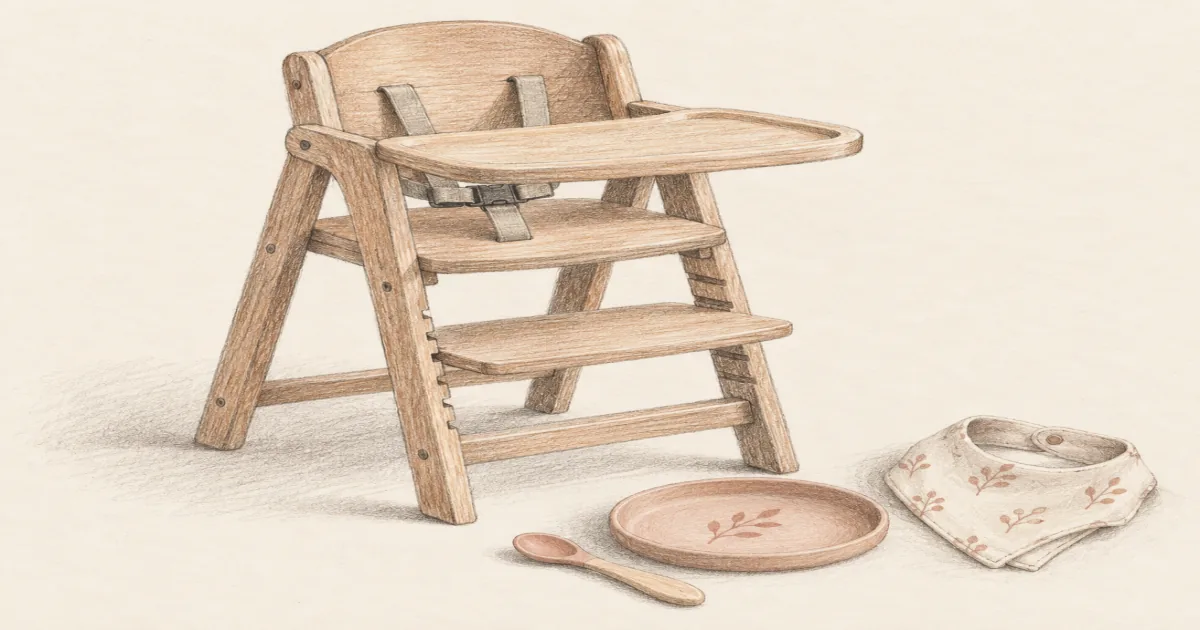
The Stokke Tripp Trapp is the pick when you want one chair to last. The seat and the footplate both adjust, so you can set a comfortable angle for a small baby and change it as your child grows. That is the whole reason it earns a place on a footrest list, and it is also why it outlives the baby years.
This bundle includes the chair, the baby set, and the five-point harness, so a six-month-old can start solids the day it arrives. The chair is rated to hold up to 300 pounds and works as a dining chair after the baby set comes off, and the compact footprint means it tucks under a table when the meal is over. The brand backs it with a warranty that extends to seven years when you register it.
Two things to know. It does not fold, so it needs a place to live. And almost everything beyond the bundle, including a tray and a cushion, is sold separately, so price the full setup before you compare it to a folding chair.
Chicco Zest LE: best value with a footrest
The Chicco Zest LE 4-in-1 High Chair is the value pick for families who want a footrest without the wooden-chair price. It has a sturdy footrest, a wipeable and removable seat pad, and a compact fold with tray storage on the rear legs, so it works in a small kitchen and comes out for meals.
The 4-in-1 design carries it through several stages: a high chair, a lower feeding chair, a toddler chair, and a youth stool rated to 60 pounds. The five-point harness can be reduced to a three-point harness for an older toddler, and the tray comes off so the chair can pull up to the table like the Tripp Trapp.
Two things to know. The footrest is fixed in height, so it fits an average-size baby well and needs help for a very small one. And it takes practice to refit the footrest each time you change the chair's setup, so most families leave it in high chair mode rather than converting it back and forth.
Do you actually need a tray?
A tray is convenient and optional. The point of a footrest chair is often to bring the baby to the table, and a tray blocks that.
Skip the tray if your table height works and you want your baby eating with everyone else. Buy one if you are starting solids and want a surface that catches the mess, or if your table is tall enough that a baby cannot reach it. The Chicco Zest LE includes a tray. The Tripp Trapp is designed to pull up to the table, so a tray is an add-on rather than a requirement.
One more note on cleaning: trays are where food hides. A tray that lifts off in one hand, like the one on the Tripp Trapp, is easier than a tray with a lip and a seam. That is worth checking in person if you can.
Who should skip a footrest chair
This setup is not for every family.
- You need a chair that folds away. The Chicco Zest LE is fine, but a wooden chair is not. If storage is the priority, a folding plastic high chair wins.
- You mostly eat out or travel. A hook-on or portable seat, like the picks in our travel high chair guide, is the right tool.
- Your baby is under six months. Wait until they can sit upright with support, and use a bouncer or a lap in the meantime.
- You want the cheapest seat that works. A basic high chair with a footrest will do. The Stokke Tripp Trapp is a long-term buy, not a low-cost one.
If the chair is for a small apartment and it has to disappear after dinner, measure first. The Tripp Trapp is compact but does not fold, and the Zest LE folds but still needs a closet or a corner.
What to check before you buy
Five checks, then you can order.
- Check the footrest adjustment. A footrest that moves with your baby is worth more than one that only fits an average 8-month-old.
- Check the harness. A five-point harness is what keeps a mobile toddler in the seat. Confirm it is included, not sold separately.
- Check the table height. Pull the chair up to your table and see if a baby's tray would be too high or too low.
- Check the footprint. A chair that stays out needs about two square feet and a place for the tray.
- Check the cleaning. One-piece seats and lift-off trays take seconds. Straps and seams take a brush, which is fine if you know it going in.
For the rest of the mealtime setup, the feeding guides cover bottles, pumps, and warmers, and the best bottle warmer handles night feeds. If you need a seat that travels, start with the best portable high chair for travel.
Frequently Asked Questions
Should a highchair have a footrest?
Yes, if you want your baby to sit comfortably through a meal. A footrest gives a baby something to brace against, which helps them stay upright and steady instead of dangling their legs and sliding forward. Chairs without one often lead to slouching, and that turns into a baby who wants out after five minutes. A footrest is one of the cheapest ways to make mealtime calmer.
What is the 90-90-90 rule for high chairs?
It means the hips, knees, and ankles each sit at about 90 degrees when your baby is in the chair. When those three angles are level, the feet are supported, the pelvis is stable, and the baby can reach the tray without leaning. You get there by moving the seat up or down and the footrest with it, which is why an adjustable footrest matters more than a fixed one.
What is a good high chair for a baby with a footrest?
The Stokke Tripp Trapp is the best answer because both the seat and the footplate adjust, so you can match the chair to your baby instead of the other way around. The Chicco Zest LE is the value pick. Its footrest is sturdy but fixed in height, so it fits an average-size baby well and needs a cushion or a different chair for a very small one.
Do you need a tray on a high chair?
Not always. A chair that pulls up to the table lets a baby eat with the family and skips a surface that needs washing twice a day. A tray helps for the first months of solids, for a baby who throws food, and for a kitchen table that is too high. The Chicco Zest LE includes a tray, and the Tripp Trapp works with or without one.
How long does a Tripp Trapp last?
Much longer than the baby years. The chair is rated to hold an adult, and the brand lists support up to 300 pounds, so it works as a dining chair long after the baby set comes off. Owners report using the same chair from six months through the preschool years and beyond. It also has strong resale value, which softens the price.
Is a footrest safe for a baby?
Yes. A footrest does not create a climbing risk on its own, but a mobile toddler can use any ledge to push up. That is why a five-point harness matters once a baby can stand. Both picks here include a harness, and the Chicco Zest LE can drop to a three-point harness for an older toddler who no longer needs the shoulder straps.
Why do wooden high chairs cost more?
Because they are furniture rather than gear. A wooden chair like the Tripp Trapp is built to be used for years and then handed down or resold, while a folding plastic chair is built for the baby years. The upfront price is higher, and almost every extra, including a tray or a cushion, is sold separately, so add those before you compare totals.