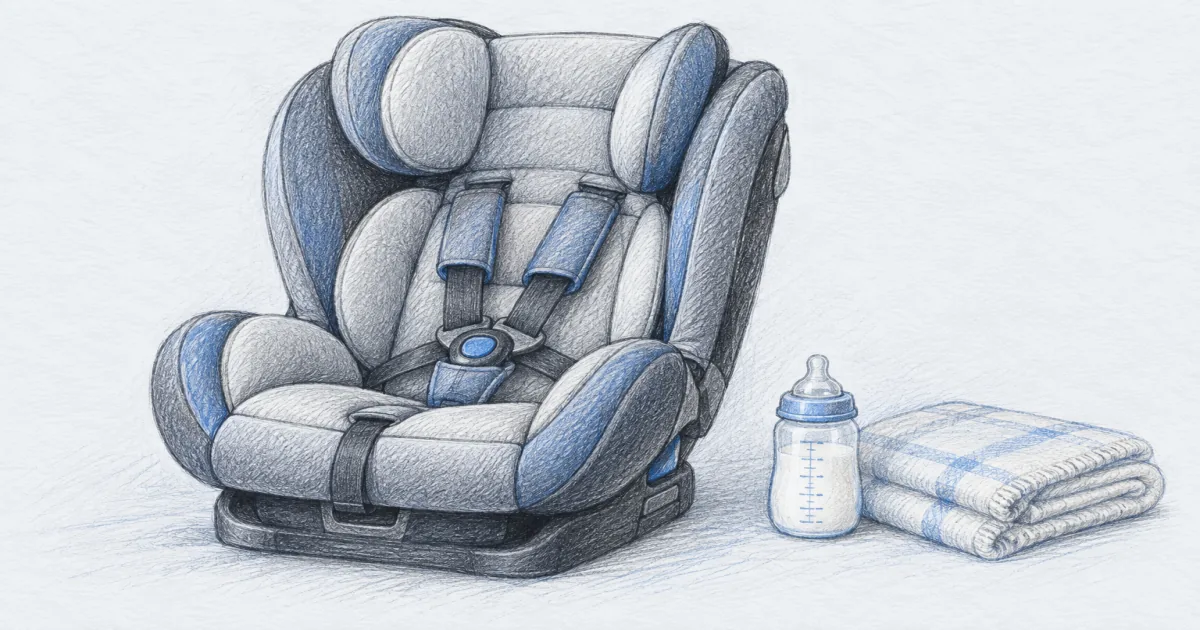
Best Convertible Car Seat (2026): 3 Picks for Real Cars
Car seats
A convertible car seat is the one you keep for years, so the right pick depends on your car and your kid. Here are three we would put in our own back seat.
Our picks
The best convertible car seat for most families is the Graco Extend2Fit 3-in-1, because it combines a top crash-test result with a rear-facing limit most kids will not outgrow early. The best value is the Safety 1st Grow and Go All-in-One, which is easier to clean than anything else here. The best budget seat is the Safety 1st Ellaris 3-in-1, a light, simple seat that still earns strong safety marks.
A convertible car seat is the long-haul seat. It faces the rear for a baby, flips forward for a toddler, and in some models becomes a booster for a big kid. That means the seat has to fit your child, your back seat, and your patience on a Tuesday morning.
Our car seat guides cover each stage, and if you are still shopping the gear that leaves the house, the best stroller for travel picks handle the airport side.
What to check before you buy a convertible car seat
Most convertible seats look alike in photos. The differences show up at the curb, when it is raining and you are buckling a squirming toddler.
One number gets oversold: the total weight limit. A seat rated to 100 lb is not safer for a newborn. The number that matters early is the rear-facing limit, and the one that matters later is how the seat fits your car.
The picks at a glance
Graco Extend2Fit 3-in-1: best convertible car seat for most families
The Graco Extend2Fit 3-in-1 is the seat we would put in our own car first. Crash tests put it at the front of its price class, and the four-position extension panel adds up to five inches of legroom in rear-facing mode. That combination is why it can keep a tall kid rear-facing longer, which is the safest way for a young child to ride.
Day to day, the seat is built for motion. Push-on LATCH connectors click in without wrestling a hook, and the harness adjusts with the headrest so you are not rethreading straps every few months. It grows from a rear-facing harness to a forward-facing harness to a highback booster, so it is the only seat many families need after the infant carrier.
It is not a small seat. At roughly 20 lb and about 19 inches wide, it can be tight for three across in a compact car. The cover is machine washable, but it takes real effort to remove, so plan that job for a weekend. If you want one seat that does the whole childhood and you drive a mid-size car or larger, start here.
Safety 1st Grow and Go All-in-One: best value for busy mornings
The Safety 1st Grow and Go All-in-One is the seat to buy when cleanup and quick buckling matter more than a weight limit. The QuickFit harness is the standout, because one pull snugs the whole harness instead of a two-hand tug-of-war. The seat pad snaps off and goes in the washer, and the two cup holders are dishwasher safe, which is rare at this price.
It covers the same three stages as the Graco, moving from rear-facing to forward-facing to a belt-positioning booster. The rear-facing limit is 40 lb rather than 50 lb, so a very tall or heavy toddler may move forward sooner. For most kids, that difference lands around the same time as the switch anyway.
Two things to know. On flatter vehicle seats, the rear-facing recline can need a rolled towel or pool noodle to sit at the right angle, and some parents report movement in small cars even after a careful install. It is also not the roomiest seat for a tall forward-facing kid. If you want an easier install and a longer rear-facing run, pay up for the Graco. If you want the easiest seat to keep clean, this is the one.
Safety 1st Ellaris 3-in-1: best budget convertible car seat
The Safety 1st Ellaris 3-in-1 is the budget seat that does not cut safety corners. Crash-test results for this seat are strong for the price, and the forward-facing fit is especially good. It is light at about 12 lb, which makes it a practical second seat for a grandparent's car or for travel.
The harness is no-rethread, with five headrest positions, so adjustments take seconds. The cover is machine washable and dryer safe. It also allows long-term LATCH use, though the connectors are hook-on rather than push-on, so the install takes a little more technique than the Graco.
The trade-offs are comfort and clarity. There is no bubble recline indicator, just a line you align with the ground, and the padding is thin compared with the two seats above. Some parents also find it hard to get a tight rear-facing fit in a small car. If your child rides often and you want plush, step up. If you need a safe seat at the lowest price, this one is easy to recommend.
Rear-facing, forward-facing, or booster: matching the mode to your kid
A convertible seat has three lives, and moving between them is about limits, not age.
- Rear-facing. Keep your child rear-facing until they hit the seat's rear-facing weight or height limit. The Graco Extend2Fit 3-in-1 goes to 50 lb, the two Safety 1st seats go to 40 lb.
- Forward-facing with a harness. Move here only after the rear-facing limit. Use the top tether, and keep the harness snug at the shoulders.
- Booster. A belt-positioning booster uses the car's seat belt. A child is usually ready when the belt sits across the middle of the shoulder and low on the hips, often around age five or six.
Two habits prevent most install problems. Get the seat checked by a certified technician, which is free at many fire stations and police departments. And recheck the install after anyone else moves the seat, because a seat that was tight last month can loosen.
Who should skip a convertible car seat
A convertible is the right default, but it is not the only answer.
If you are shopping the rest of the first year, our car seat guides walk through each stage. For the gear that leaves the house, start with the best stroller for travel.
Frequently Asked Questions
What are the downsides of convertible car seats?
They are bigger and heavier than an infant seat, so they live in the car instead of clipping into a stroller. The recline and harness take some practice to fit correctly, and cheaper models skimp on padding. The upside is that one seat can last from the newborn days through booster age, which is why most families buy a convertible after the infant carrier.
What is the safest convertible car seat in 2026?
There is no single winner, because every seat sold in the US has to meet the same federal standard. Among the seats here, the Graco Extend2Fit 3-in-1 has the strongest crash-test showing, and the Safety 1st Ellaris also tests very well for its price. The seat that protects your child best is the one installed tightly and adjusted to their size.
Which car seat is statistically the safest?
Crash data does not crown one brand. What the data does show is that rear-facing is the safest way for a young child to ride, and that a tightly installed seat beats a fancy one that moves around. That is why the 50 lb rear-facing limit on the Graco Extend2Fit 3-in-1 matters, and why a free inspection at a fire station is worth the trip.
Are convertible car seats worth it?
Yes, for most families. A convertible replaces the infant seat and then the forward-facing seat, so you buy once instead of three times. It costs more up front than an infant carrier, but it lasts years longer. The main reason to skip it is if you want the convenience of carrying a sleeping newborn indoors in a bucket seat.
How long can a child stay rear-facing in a convertible car seat?
As long as the seat allows and your child still fits. The seat's rear-facing weight and height limits are the ceiling, and many kids can stay rear-facing past age two. The Graco Extend2Fit 3-in-1 and the Graco Extend2Fit 2-in-1 go to 50 lb rear-facing, while the Safety 1st Grow and Go and the Safety 1st Ellaris stop at 40 lb. Keep them rear-facing until they hit either limit.
Can a convertible car seat fit three across?
Sometimes, and it depends more on your car than the seat. Narrow models help, and a slim seat like the Safety 1st Ellaris is designed for a three-across fit in the right back seat. Measure your back seat and check the seat width before you count on three across. A CPST can tell you in a few minutes whether your setup works.
When should you switch from an infant car seat to a convertible?
When your baby outgrows the infant carrier by weight or height, or when the carrier's handle starts to feel like more work than the car seat is worth. Most families move around the first birthday, but some move earlier if the baby is tall. Move to a convertible whenever it fits your child and your car better, not on a specific date.