Best Infant Car Seat for Small Cars (2026): 3 Narrow Picks
Car seats
A small back seat makes an infant seat harder to live with, not just harder to install. These three are narrow, light enough to carry, and easy to click in.
Our picks
The best infant car seat for small cars is the Chicco KeyFit Max ClearTex when width and rear-facing room are the whole problem. The best value is the Graco SnugRide Lite LX if you carry the seat in and out all day. The easiest to install is the Chicco KeyFit 30 ClearTex, which does most of the work for you.
An infant seat only lasts about a year, so the seat you pick should solve the problem in front of you: a back seat that runs out of room. That usually means a narrower shell, a base that installs tight on the first or second try, and a carrier light enough that you do not dread the school pickup line.
If your child has already outgrown the bucket stage, our convertible car seat for small cars guide covers the seat that comes next, and the full convertible car seat guide covers the wider field. Our car seat guides walk through each stage in order.
What actually makes an infant seat fit a small car
Width and front-to-back room are different problems, and most shoppers only check one of them.
One number gets oversold: the maximum weight. A seat rated to 30 pounds does not help when your baby is 6 months old. The numbers that matter today are how wide the shell is and how easy the base is to install correctly.
The picks at a glance
Chicco KeyFit Max ClearTex: best overall for small cars
The Chicco KeyFit Max ClearTex is the narrowest seat here at about 16.5 inches, and it is the one we would put in a compact back seat first. The shell is slim, the base is straightforward to level, and the anti-rebound bar adds stability and a little more legroom for a rear-facing baby.
The five-position headrest moves up with the harness, so the seat grows to 32 inches instead of stopping early. The removable newborn positioner makes it usable from around 4 pounds, and the ClearTex fabric is finished without added flame retardants and carries a GREENGUARD Gold certification for low emissions.
If you want one infant seat that covers a small car and a tall baby, this is the pick. If you will move the carrier in and out several times a day, the lighter Graco below is the more comfortable daily choice.
Graco SnugRide Lite LX: best value and lightest carry
The Graco SnugRide Lite LX is the value pick, and it is also the easiest carrier to live with. The seat weighs about 7.2 pounds on its own, the base is light, and the four-position base with a level indicator keeps the install simple in most cars.
It fits babies from 4 to 30 pounds and up to 32 inches, and the Click Connect base clicks into Graco strollers, which matters if you already own a Graco travel system. Graco also sells extra bases, so a second car or a grandparent's car takes about a minute to set up.
The trade-off is the vehicle-belt install, which is fussier than the LATCH install. If your car has lower anchors, use them. If it does not, read the manual once and keep a rolled towel handy for the newborn angle, which is what child passenger safety technicians recommend for seats that want to tilt.
Chicco KeyFit 30 ClearTex: easiest to install
The Chicco KeyFit 30 ClearTex is the install pick, and for a first-time parent that is worth real money. Two bubble level indicators, a spring-loaded leveling foot, push-on LATCH connectors, and a force-multiplying tightener do most of the work, and two lockoffs make the seat-belt route just as secure.
The shell is about 16.75 inches, close enough to the KeyFit Max that it still fits a tight back seat, and the carrier weighs about 9.5 pounds. The ClearTex fabric is finished without added flame retardants and carries a GREENGUARD Gold certification, and the seat includes a removable head and body insert for a newborn from around 4 pounds.
Choose this one if you want the most proven install in the group and you do not need the extra rear-facing height of the Max. Choose the Max if your baby is long or your back seat is very tight.
Who should skip an infant seat and buy a convertible instead
An infant seat is not the right first seat for every family.
If you drive daily and the seat leaves the car, an infant carrier earns its keep in the first six months. If you mostly walk and take a car twice a week, a convertible seat that stays installed is the calmer choice.
What to check before you order
A few minutes of measuring saves a return.
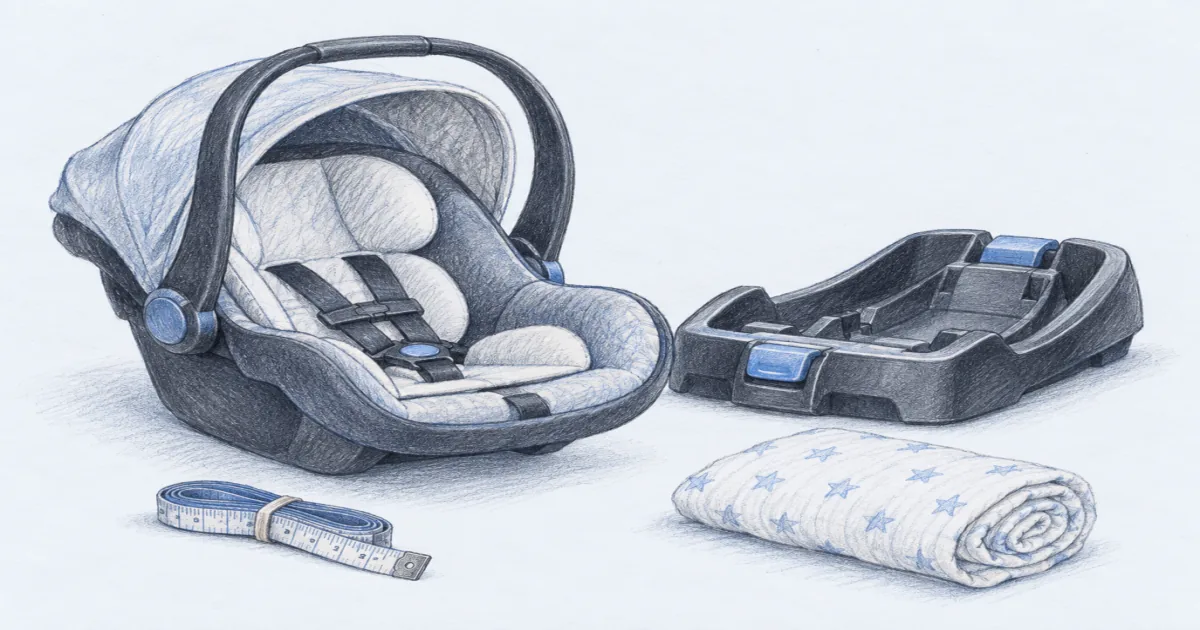
- Measure your back seat width. You want the seat and base to sit flat with room for the door to close without pressing on them.
- Measure the space behind the front seat. A rear-facing seat needs the front seat forward. Sit in the passenger seat after you check.
- Confirm your lower anchors. Most cars built after 2002 have them. If yours does not, plan on the seat-belt install and read that section first.
- Check the handle position. All three picks can travel with the handle up, which is one less thing to remember.
- Register the seat. Registration is how you hear about a recall, and infant seats do get recalled.
- Get the install checked. Many fire stations and hospitals check car seat installs for free. Take the base in before the baby arrives.
For the next seat, start with our convertible car seat for small cars guide. For the rest of the gear that leaves the house, the best stroller for travel picks handle airport days and small trunks.
Frequently Asked Questions
What is the best infant car seat for a small car?
The Chicco KeyFit Max ClearTex is the easiest recommendation for a tight back seat because it is the narrowest pick here at about 16.5 inches across the shell. It also has an anti-rebound bar, which adds legroom for a growing baby. If front-seat room is your problem rather than width, measure the distance from the back seat cushion to the front seat back before you buy, because a rear-facing seat eats that space.
Which infant car seat is the smallest?
Width is the number that matters most in a small car, and the Chicco KeyFit Max ClearTex is the narrowest here at roughly 16.5 inches. The Chicco KeyFit 30 ClearTex is close behind at about 16.75 inches. The Graco SnugRide Lite LX runs about 18 inches across but makes up for it with the lightest carrier of the three at 7.2 pounds.
What is the number one rated infant car seat?
The Chicco KeyFit line is the one child passenger safety technicians point to first, and the KeyFit 30 has the longest track record. It earns top marks for install and use, and the KeyFit Max carries the same install design into a narrower shell with more rear-facing room. Either is a safe choice. Pick the Max for space and the 30 for the most proven track record.
Do I need the base, or can I use the seat belt only?
You can install an infant seat without its base using the vehicle belt, and all three picks support it. The base is faster for daily use and keeps the angle consistent, so most families keep one base in the main car. If a second car needs one, Chicco and Graco both sell extra bases separately.
How long can a baby stay in an infant car seat?
Until they reach the seat's rear-facing height or weight limit. All three picks here run to 30 pounds. The Chicco KeyFit Max ClearTex is the tallest of the group and fits a baby up to 32 inches, which usually means it lasts a few extra months. After that, most families move to a convertible seat and keep it rear-facing.
Can a 22 pound baby face forward?
No. At 22 pounds a baby should still be rear-facing in a convertible or all-in-one seat that is rated for it. Every state also requires a rear-facing seat until at least age one, and safety experts recommend staying rear-facing until the seat's limit. The infant seats here are carrier-only seats, so the switch usually happens when your baby outgrows them.
Will an infant car seat fit in a compact car?
Usually yes, with the base installed in an outboard seat and the front passenger seat moved up. The narrow picks here leave room for a second passenger or a second seat. Measure your back seat width and the space behind the front seat before ordering, and have a certified technician check the install for free at many fire stations.
Do infant car seats expire?
Yes. Most expire six to seven years from the manufacture date, and the Graco seats here carry a seven-year limit. Never buy a used seat without the date label and a full history, and replace any seat that has been in a crash.